I Lost 70% of My Eyesight From Stress. Here's What I Do Differently Now.
Summer 2023. I woke up one morning and the left side of my vision was gone. Not blurry. Not “I need new glasses.” Just… absent. Like someone had Photoshopped a gray smudge over everything.
In this post
I’ll cover the burnout physical symptoms nobody warns you about, why the job search made things worse before they got better, what “leisure hygiene” actually looked like for me, and what I’d do differently now.
The ophthalmologist ran tests, asked about my sleep, my workload, my stress levels. Then he said something I’ll never forget: “Your body is telling you to stop. How much longer are you going to ignore it?”
He recommended a book: Johann Hari’s Stolen Focus. I ordered it that day. The thesis, in one sentence: our attention didn’t collapse by accident. It was stolen, systematically, by the way we live and work. I read most of it with one working eye, which felt painfully on the nose.
Seventy percent vision loss in that eye. Central serous retinopathy. Stress-induced. Reversible, if I changed things.
Here’s the part that made it complicated: by day, I was a Senior Recruiter. By night, I was a product designer. I’d completed a UX bootcamp in 2022 and had been doing real design work since 2021. Ronin & Co, Bowtie. Freelance projects. I had a portfolio, and I had shipped things. But I couldn’t find a clean path to transition full-time. The job market was/is terrible. Every application felt like shouting into a void. So I kept straddling both careers, too exhausted at night to do the design work I actually cared about, too miserable during the day to believe I’d ever escape.
I got laid off a few weeks later. From the recruiting job.
The timing was brutal. It was also the only way I was getting out. I had wanted to leave for months but felt trapped. I had every classic sign you need to quit your job but none of the courage to actually do it. No backup job lined up. No idea what came next. Just a gut feeling that if I stayed any longer, my body would do something worse than take my eyesight. It already had. My job disappearing was the exit I was too scared to take myself.
Burnout doesn’t announce itself. Your body does.
Here’s what nobody tells you about burnout physical symptoms: they show up before you admit anything is wrong. I didn’t feel burned out. I felt busy. Not productive-busy. The bad kind where you’re always doing something but nothing is going anywhere. The kind where every sprint feels like running in sand.
I was working late as a recruiter, but mostly spinning. Filling reqs that got canceled. Sourcing candidates for roles that weren’t real yet. The job wasn’t hard in a good way. It was draining in a way that made me feel like I was getting worse at everything. Meanwhile, my design work sat untouched. The thing I’d gone to bootcamp for, the thing I actually wanted to do. I had nothing left at the end of the day. I wanted out, but I couldn’t see a path (no pun intended). The market was frozen. I didn’t have a full-time design offer. So I stayed, and my body started keeping score.
The vision came back over several weeks. Slowly. Patch by patch. I’d catch a flicker of something in my peripheral and feel this ridiculous surge of gratitude. Slowly the smudge / cobwebs went away and I could see clearly again.
The layoff was relief wrapped in terror. I was free from recruiting. But I had no full-time design job lined up. I spent weeks wondering if I was good enough to be a designer at all, even though I’d been through bootcamp and part-time work. Straddling two careers will do that to you. The burnout is bad enough. But straddling two careers does something worse, it makes you forget which one you’re actually good at.
The layoff was supposed to fix the burnout. The job search made it worse.
Getting laid off was supposed to be the reset. It wasn’t. Not right away.
Turns out, applying for 241 jobs and getting rejected 200 times is its own kind of burnout. Different from the toxic-job kind. Same end result. You stop caring, you stop trying, you start wondering if the problem was never the market but you.
241 applications. 12 interviews. 156 companies never responded at all. The silence is worse than the rejection. Rejection is information, at least. Silence is nothing. You check your email. You check it again. You refresh. You wonder if your application even went through or if it’s sitting in some ATS black hole with 300 others.
I wrote about the tactics that actually worked in my job search guide. Boolean searches, applying within 24 hours of a job posting, skipping cover letters entirely. That post covers the how. What it doesn’t cover is what the search does to you.
Job search burnout is quiet. You stop opening LinkedIn because that becomes its own type of misery. Seeing people get laid off on your timeline doesn’t help. Reaching out to your network can be beneficial during your job search, but can be a source of burnout as well. You sleep at weird hours because what’s the point of an alarm when there’s nowhere to be.
The layoff was a one-time shock. Even if you were expecting it, it still hits you hard. It’s an attack on your identity and selft-worth. The job search was a slow grind, month after month. Different trigger, same cortisol.
Your body keeps score either way. It’s okay to give yourself grace. It’s okay to take a break. It’s okay to not be productive right after you get laid off. Take the time to recover and re-center yourself.
- You don’t have to be a machine.
- You don’t have to be a robot.
- You don’t have to be a workaholic.
- You don’t have to be a perfectionist.
- You don’t have to be a martyr.
- You don’t have to be a hero.
- You don’t have to be a victim.
- You don’t have to be a loser.
- You don’t have to be anything.
Here’s the deal, at some point you can pick up the pieces and start again. Start small, and start with the things that make you feel alive. If you have your side projects that have been gathering dust, it’s probably the best time reboot those old interests. Having something you’re passionate about to occupy your mind while you don’t have the pressure of having to put in the hours of a 9-5, can be a fantastic way of honing your skills. The key is to find something that doesn’t feel like work, but still gives you a sense of accomplishment. It can be a hobby, a side project, or even volunteering. The important thing is to find something that makes you feel alive and gives you a sense of purpose.
What “leisure hygiene” actually looks like
Arthur Brooks, the Harvard behavioral scientist whose career-type framework changed how I see my own trajectory, talks about leisure hygiene the way dentists talk about flossing. Everyone agrees it’s important. Nobody does it consistently. He draws a hard line between active leisure (making things, moving your body, being with people) and passive leisure (Instagram, Netflix, the infinite scroll).
The summer I lost my eyesight, I was too exhausted for anything. My day job drained me. My design work sat untouched. The thing I actually cared about. I’d finish recruiting, open my design files, stare at them for twenty minutes, then close the laptop. Scrolling Instagram felt like the only option my brain could process.
Here’s what changed. Four things that actually work if you’re trying to figure out how to recover from burnout:
I moved my body. Not just for fitness. I got back on my bike. The part where you’re climbing a hill and all you can think about is the next pedal stroke and whether you remembered water. It is the only time my brain shuts up. I started taking long walks around Denver in the mornings, which is a surprisingly good way to see a city you live in but never actually look at.
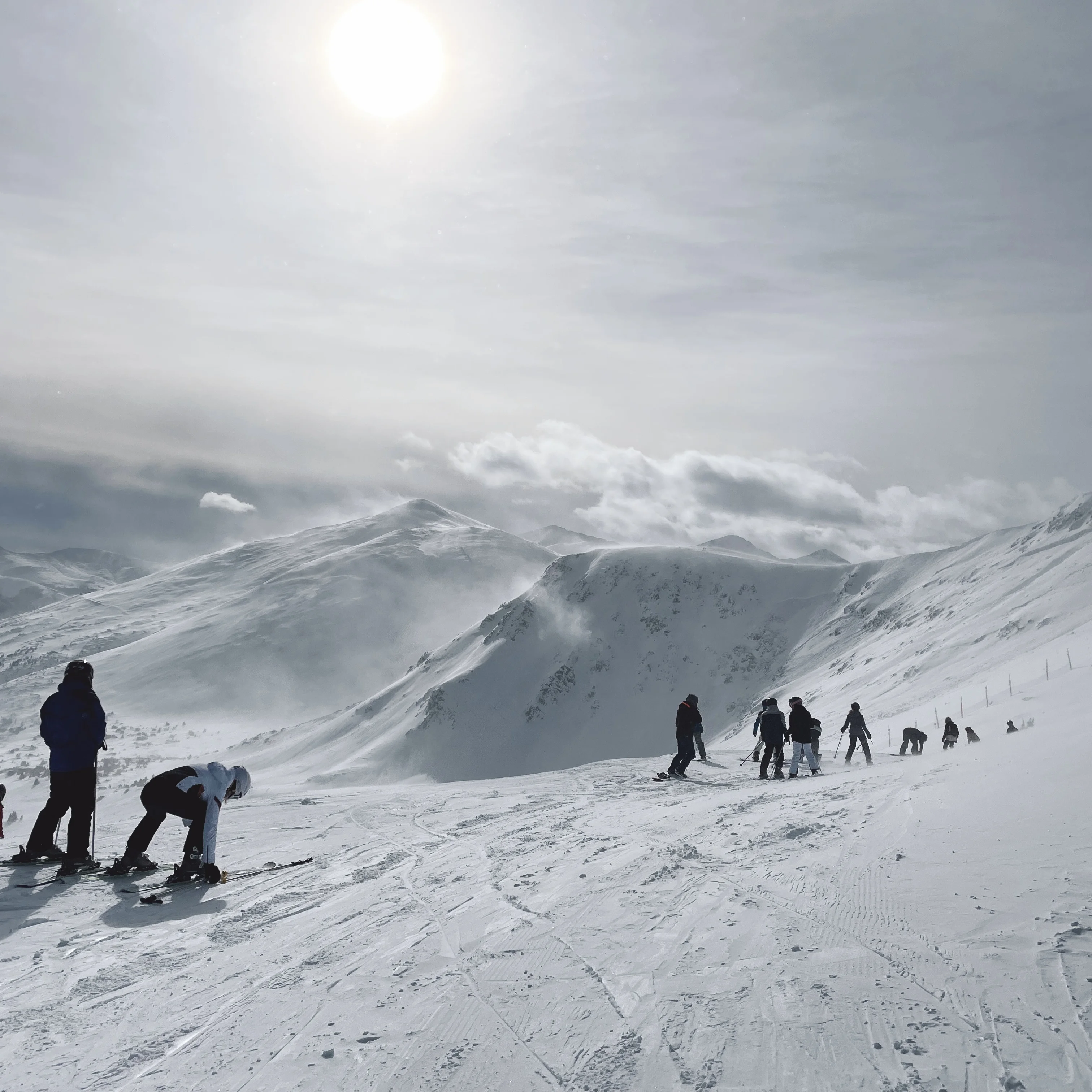
I also picked up pickleball that summer. Never played before. Loved it immediately. They opened a brand new court right outside my complex, and I have been hooked ever since. Made sure I did the thing I loved the most, skiing. I’ve been carving the slopes since I was a toddler, it’s my passion. Because I was laid off, I didn’t have health insurance between jobs. Fuck it. I didn’t care, and I skied over 25 days that season.

I started baking again. Cakes, mostly. The kind that take three hours and produce a kitchen that looks like a flour bomb went off. Making a thing that exists in the physical world hits different when your day job exists entirely in pixels.
I went on Zoom calls with designers. I reached out to people further along in their careers and asked for 20 minutes of their time. How they got their first full-time design job. What they wish they had known. What they would do differently. I also asked them to critique my portfolio. It was terrifying. It was also the first time in months I felt like I was moving forward.
I found design meetup groups. Being an extrovert, I recharge around people. I joined a few local design meetups and started showing up regularly. I met people doing the work I wanted to do, and they reminded me I could do it too.
Brooks was right about happiness, but wrong about my timeline
Arthur Brooks also says the single biggest predictor of job satisfaction isn’t salary or title. It’s life satisfaction. Happy people bring happiness to work. Unhappy people don’t become happy because work got better.
I used to think the equation ran the other direction. Land the right job, and everything else falls into place. What I learned in 2023 is that a bad job will poison everything. Your sleep. Your relationships. Your eyesight. You can’t out-leisure a job that’s making you sick. Brooks is right that happiness outside work matters. But sometimes how to recover from burnout starts with a simpler answer: stop doing the thing that’s burning you out. And if you can’t figure out how to leave a job you hate, the universe might do it for you.
A bad job isn’t a room in the house. It’s a gas leak. It doesn’t matter how nice the rest of the house is. You have to get out.
What I would do differently
I’d stop treating my body as hardware that runs whatever job I’m stuck in. I’d stop believing that “I’ll sleep when things settle down” is a thing that ever actually happens. And I’d stop straddling. Getting laid off from recruiting forced me into design full-time. It was the push I should have given myself two years earlier.
I’d learn that sharpening the saw isn’t a productivity metaphor. It’s a survival strategy. And sometimes sharpening the saw means putting down one saw and picking up a different one entirely.
Now, when I feel the familiar tightness behind my eyes, the early warning system my body installed after 2023, I close the laptop. I find my bike shoes. I text the group chat. I do something that exists outside the pixels.
Your career is part of your life. It’s not the whole thing. And if you don’t take care of the whole thing, the part will take care of itself. It won’t be pretty.